

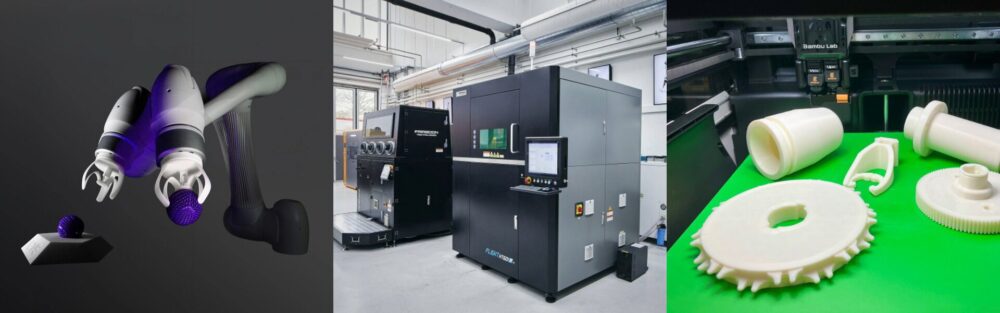
Additive manufacturing and industrial 3D printing technologies continue to transform modern manufacturing landscapes. Moving far beyond prototyping, companies are now actively leveraging 3D printing for adaptive production systems, scalable series manufacturing, and on-demand digital spare parts.
As material choices expand and processing speeds increase, manufacturers across automotive, aerospace, and general industry are finding new ways to integrate additive solutions alongside traditional manufacturing methods.
Adaptive Manufacturing and Flexibility
Industrial 3D printing enables high design freedom and rapid adaptation without the need for expensive tooling changes. This flexibility allows production lines to respond swiftly to customized requirements, small batch sizes, and complex geometries that would be difficult or impossible to produce via conventional machining.
“Additive manufacturing bridges the gap between digital design and physical realization, offering unprecedented flexibility for modern production workflows.”
Series Production and Digital Spare Parts
With advancements in high-performance polymers and composite materials, 3D printing has secured a firm foothold in end-use series production. Furthermore, digital spare parts inventories reduce warehousing costs and physical storage requirements. Instead of keeping physical components in stock, digital blueprints can be printed on demand right where they are needed, minimizing downtime and streamlining logistics across global supply chains.