

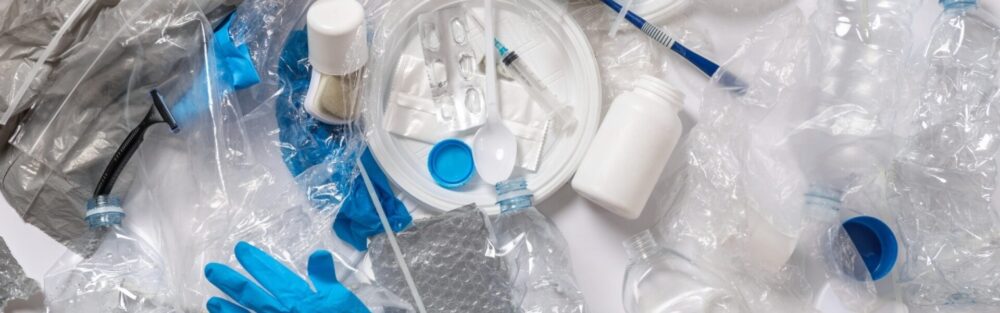
Plastics enable sterile, safe and precise applications in medical technology, yet many products are used only once. This creates a particular challenge for the circular economy: materials should be used for longer and recovered without compromising hygiene or patient safety. Which circular approach is suitable depends heavily on the individual medical device.
Whether plastics can be recovered after use depends not only on the material. Product design, separate collection, and available recycling options also play a crucial role. Stakeholders must evaluate whether a device can be collected separately and recycled after use, or if hygiene, material composition, and regulatory requirements limit available options.
Which Solution Fits Which Medical Device?
Whether reuse, reprocessing, or recycling makes sense depends on the individual medical device. The main evaluation factors include:
Hygiene: Can the device be safely cleaned, disinfected, or sterilized?
Contamination: What risks arise from contact with patients, bodily fluids, or other substances?
Material and Design: Can the plastics used be identified, separated, and recovered?
Regulation: What statutory requirements apply to reuse or reprocessing?
Infrastructure: Can the product be collected separately after use and directed to an appropriate recovery route?
“Materials should be used for longer and recovered without compromising hygiene or patient safety.”
One Product, Different Circular Pathways
Disposable products remain indispensable in many medical applications. This makes it essential to determine which materials can be channeled into appropriate recycling streams after use. However, technical reusability is not always sufficient. For instance, reprocessing is not generally permitted throughout the EU, as the Medical Device Regulation (MDR) links reprocessing to national laws of respective Member States while setting strict requirements for safety and performance.
Furthermore, recovered plastic does not necessarily have to return to another medical device. Because medical applications are subject to stringent quality, safety, and traceability requirements, using recovered material in other suitable applications can still successfully replace virgin raw materials and provide another life cycle.
Where Circularity Reaches Its Limits
Circularity cannot be implemented effectively for every medical device. Reuse may be ruled out entirely for safety reasons, while material recycling might be technically possible but require disproportionate effort. In some cases, quality limitations or a lack of suitable recovery routes mean that circular solutions are currently unavailable. Consequently, the decisive step must happen early during product development and design, turning circularity from a downstream waste-management issue into a lifecycle-spanning task.